How I Use Houseplants to Make a Home Feel Finished (Not Cluttered)
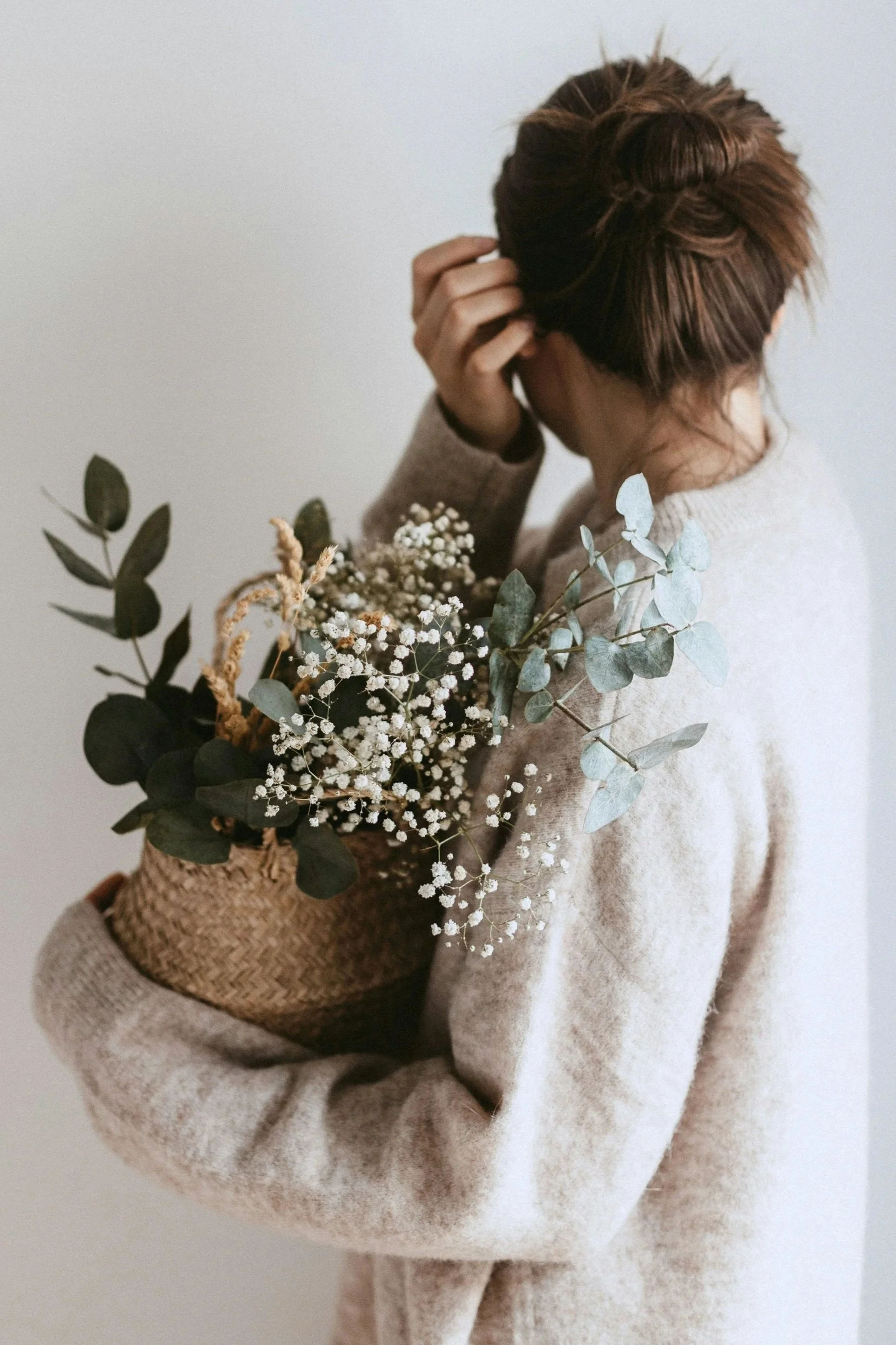
The Difference Between Plants and Clutter
What matters isn't how many plants you have. It's whether they feel connected to the room around them.
For years, I wanted to be someone who had beautiful houseplants. I loved the look of them in magazines and beautifully designed homes—a large plant in a corner, something trailing from a shelf, just enough greenery to soften a room and make it feel warm, layered and alive.
The problem was that every plant I bought seemed to die.
Leaves turned brown. Stems became sparse. Plants looked sad and neglected. I'd try again, convinced I'd found the right plant this time, only to watch it slowly decline over the next few months. For a long time, I assumed I simply didn't have a green thumb.
Looking back, I think something else was going on.
When I was practicing law, my days were full and my brain was full too. Between work, kids, deadlines, and everything else, I don't think I had the mental bandwidth to pay attention to plants. And it turns out that even the easy plants require some attention—not necessarily a lot, but enough that you notice when they're drying out, when they need more light, when a leaf is dying, or when they're happier in a completely different room.
Looking back, I don't think I lacked a green thumb. I think I lacked the capacity to notice what they needed.
So if you've killed your share of houseplants, give yourself a little grace. It might not be because you're bad at plants. You might just be busy.
About a year and a half ago, after stepping away from my legal career, I started spending more time at home and slowly began adding plants back into our spaces. This time things were different—not because I suddenly became a plant expert, but because I finally had enough time to pay attention.
I still don't have a perfect watering schedule. I don't have a designated plant day on my calendar. Every week or two I walk through the house, check the soil, notice what's thriving and what isn't, and give things what they need. Most of my plants get a thorough watering every couple of weeks, although in the summer I pay a little closer attention because everything dries out more quickly.
I'm still figuring it out, but surprisingly I've come to enjoy it. I enjoy watering them, trimming dead leaves, watching a new leaf emerge, and moving plants around to see what thrives where. There is something oddly satisfying about caring for something long enough to watch it grow.
Why Plants Matter
What I love most about plants isn't actually the plants themselves. It's what they do to a room.
You can have beautiful furniture, great lighting, and thoughtfully chosen decor, but a room can still feel a little flat. Plants add softness, movement, shape and life. They're often the final layer that takes a room from looking styled to feeling lived in.
One of the reasons I think plants work so well in a home is that they balance all the structure. Most rooms are full of straight lines—shelves, cabinetry, tables, windows, counter-tops and furniture. Plants introduce something different. They bring organic shapes, natural movement and a softness that helps balance all those harder surfaces.
Alongside colour and texture, they add another layer to a room and help a space feel more complete without making it feel overly decorated.
But I've also learned that more plants aren't necessarily better. For a while, I thought the answer was simply adding more greenery. Now I think thoughtful placement matters far more than quantity. Too many plants in too many locations can start to feel cluttered and overwhelming, while a few well-placed plants often feel calmer, more intentional and more elevated.
How I Style Plants in a Home
Over time, I've stopped thinking about plants as houseplants and started thinking about them as another layer of design. The same principles that apply to styling a shelf, a coffee table, or an entire room apply to plants too. I'm thinking about scale, texture, shape, height, balance, and most importantly, what the room needs.
Use Plants to Solve Design Problems
When I walk into a room, I'm often asking myself what feels missing.
Oftentimes the answer is height. If everything in a room sits at roughly the same level—sofas, chairs, coffee tables and side tables—the space can feel visually flat. A tall plant can draw your eye upward and instantly add presence. Some of my favourite plants for adding height are fiddle leaf figs, rubber plants, bird of paradise plants and snake plants.
Other times a room feels too rigid. That's where plants can soften hard lines. A trailing pothos spilling from a shelf breaks up the strong horizontal and vertical lines of cabinetry and shelving. Larger plants can soften sharp corners or add movement to spaces that feel too structured.
Plants aren't always there to be the focal point. Sometimes they're there to make the rest of the room feel better.
Create Moments, Not Clutter
One of the biggest mistakes I made early on was treating every empty corner as a place that needed a plant.
Now I do the opposite.
Rather than scattering plants throughout a room, I try to create a few intentional moments. That might be a larger statement plant anchoring a corner, a small grouping on a console, or a trailing pothos softening a bookshelf.
What matters isn't how many plants you have. It's whether they feel connected to the room around them.
Give Plants Room to Breathe
Not every empty space needs something in it. In fact, some of the best plant styling decisions I've made have involved removing plants rather than adding them.
If a room already has a beautiful piece of artwork, a statement light fixture, or another strong focal point, I often leave it alone. Some spaces already hold their own.
Plants don't always need to be the star of the show. Giving them a little breathing room allows their shape and texture to stand on their own without competing for attention.
Mix Shape, Texture and Scale
Just like layering wood, fabric, metal, and stone in a room, mixing different plant shapes creates more interest.
A structured snake plant feels completely different from a trailing pothos. A broad-leafed fiddle leaf fig creates a different effect than a compact Chinese evergreen. Combining different shapes and textures helps a room feel layered and collected rather than overly styled.
Be Willing to Move Things
This may be the most important lesson I've learned: plants aren't permanent.
I've moved the same plant through three or four different rooms before finding the spot where it was happiest. Light changes throughout the year. Rooms evolve. Furniture gets rearranged. What worked perfectly a year ago may not be the best location today.
I've learned not to get too attached to a particular placement. Sometimes the best thing you can do for a plant—or a room—is simply move it somewhere else.
The Plants That Have Worked Best for Me
After plenty of trial and error, I've found a handful of plants that genuinely work in our home.
My Easiest Plants
If you're busy, these are the plants I'd recommend first.
Rubber plants are probably my overall winner. I have one at home and one at our lake house, and both seem happy with very little attention. They're attractive, architectural and remarkably forgiving.
Snake plants are another favourite. They're easy to neglect, tolerate lower light and add clean vertical lines to a room.
ZZ plants are almost impossible to upset. They're not my favourite aesthetically as they mature, but they're among the easiest plants I've ever owned.
And then there's pothos. Fast growing, forgiving and incredibly easy to propagate. If you're new to houseplants, I can't recommend pothos enough.
My Favourite Statement Plants
When I need height, structure, or a little drama, these are the plants I reach for.
The fiddle leaf fig has probably been my biggest surprise. Despite its reputation, it's been one of my easiest plants and creates incredible visual impact. The one at our lake house receives very little attention, goes surprisingly long stretches between waterings and still looks fantastic.
The bird of paradise has been a little more temperamental. It definitely prefers a bright window and I often find myself battling split leaves and periods where it looks less than thriving. Even so, I love the scale and tropical feel it brings to a room.
The monstera is another favourite. Its dramatic leaves and tendency to grow toward the light create a sculptural feel that works beautifully in the right space.
My Favourite Plants to Propagate
Pothos and spider plants are by far my favourites.
For years I had one sad spider plant that never seemed happy. Then I moved it to a different location and suddenly it started producing babies everywhere. Now I have multiple spider plants throughout the house, all propagated from that original plant.
There is something incredibly satisfying about clipping a stem, placing it in water, watching roots appear, and creating a completely new plant.
The Plant I've Struggled With Most
The Chinese evergreen.
I love the way it looks and continue to use it because it stays compact and fits beautifully into different rooms. But compared to my other plants, it requires more watering, more attention and seems more sensitive to depleted soil.
When it's happy, it's gorgeous.
When it's not, it lets me know.
Progress, Not Perfection
I still wouldn't say I have a natural gift for plants. Some people clearly do. But I've stopped killing everything.
I've learned that placement matters. I've learned that more isn't always better. I've learned that some plants aren't worth saving and I've learned that beautiful plant-filled homes don't happen by accident.
The biggest shift has been realizing that plants aren't just something you add to a room. They're part of the overall design. When they're chosen thoughtfully and placed intentionally, they can add softness, height, texture and life in a way that very few other things can.
I'm still experimenting, but I've finally found a handful of plants—and a way of using them—that works in our home.